

The 2014 Bahrain GP silenced the critics after a jaw-dropping display of action and drama.
F1 has received a lot of criticism recently, mostly with regards the lack of action and the fact that the new V6 turbo powertrains are contrastingly quiet to the V10 and V12 engines of yore.
But the third round of the 2014 season was a lights-out-to-chequered-flag race with non-stop action, including a whopping collision that sent the Sauber of Esteban Gutierrez flipping over and landing violently on its roll cage hoop.
Thanks a lot for all of your attentions, the most important thing is that I’m well & ready for the next one!! We keep pushing!! All the best
— Esteban Gutierrez (@EstebanGtz) April 7, 2014
My opinion
Since my last post (after the Australian GP), there has been much debate surrounding the sport. Are the cars are too slow, and are they too quiet?
While I agree that the new powertrains (or, engines) sound a bit strange for an F1 car, I’m not so sure that their quietness is such a bad thing.
I accept the view that when you turn up to the event, having paid your ticket entry fees, you expect an ‘atmosphere‘ from every race weekend.
For Formula 1, that atmosphere includes the engine noise, as well as wheel-to-wheel racing, the infamous ‘turn one, lap one‘ incidents zone, pit-stop strategies, and lots of on-track overtaking.
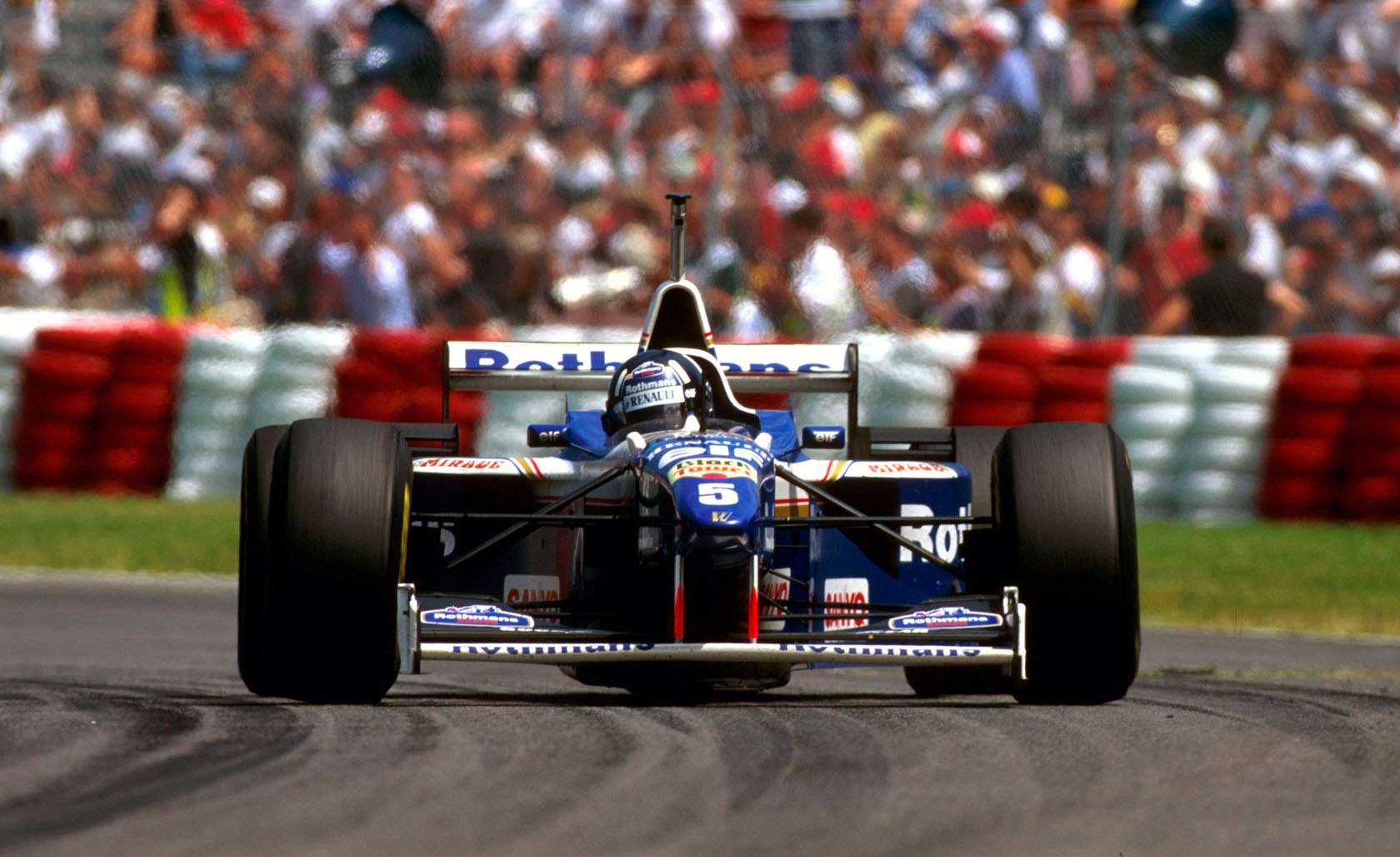
I’ve watched F1 since my childhood, and can only just remember Damon Hill winning the championship. Since the start of the 2004 Season, I have devoted much of my life to watching every single Grand Prix – that’s 10 years of devotion and passion for F1 motorsport.

I’ve seen Michael Schumacher crowned a 7x world champion, and witnessed his amazing and tantalising battles with the fiery Spanish dragon of Fernando Alonso between 2004 and 2006.
During those same seasons, I watched the endless battles between Juan Pablo Montoya (Williams) and Kimi Raikkonen (McLaren) – who would both end up as McLaren teammates before Montoya left F1 for NASCAR mid-2006.
But I’ll never forget when Lewis Hamilton raced onto the F1 calendar in 2007 and took the world by storm, almost being crowned a rookie champion in his first season – except for a retirement in the Chinese GP where he got stuck in the gravel trap on the pit-lane entrance, and his battle with teammate Fernando Alonso that saw the Woking-based McLaren outfit implode on itself.
I watched Lewis Hamilton drive to championship glory in 2008, falling off my seat and screaming loud at that last-corner overtake – after watching a proud Felipe Massa win the race, and potentially the title, in front of his home crowd at Interlagos.
All Hamilton needed to do was finish 5th, but as rain fell in the closing stages of the race, it all but seemed an impossible feat.
As it happened, Toyota’s Timo Glock was on slick tyres in the wet, and even though Felipe Massa had crossed the line in first place (doing all he needed to win the title at his home Grand Prix), it was on the very last corner of the last lap where Glock crawled around, struggling to keep control of his Toyota, as Hamilton swept up the inside into 5th position to snatch the title from Massa’s hands.
Changing tides
In 10 years of watching F1, I’ve seen how the sport has changed over time, and how the cars have developed.
Between 2004-2005, I saw the end of the 3L V10 era – what I prefer to call the era of ‘ears bleeding, cars screaming‘ – and then the introduction of the 2.4L V8 engines in 2006.
I have also seen how McLaren imploded in 2007 – not just from the fiery Hamilton and Alonso rivalry, but also the ‘spygate‘ scandal between McLaren and Ferrari which brought shame to the sport in 2008.
This was followed just a year later by another shameful F1 act, ‘crashgate,’ at the hands of Renault in 2008 – only coming to light in 2009 when Nelson Piquet Jr was dropped by the Enstone-based outfit.
Renault team principal Flavio Briatore’s race-fixing strategy saw Piquet Jr deliberately crashing mid-race, in order to aid team-mate Alonso’s chances of a win at the 2008 Singapore GP.
I even watched in anticipation as the shape of the cars changed in 2009, and saw how those new cars handled so differently from the previous era that many drivers and teams fell behind. It was then up to Brawn GP’s Jenson Button to grab the title while he could, and crikey did he do it in style!

Having lost Honda in December 2008, Brawn’s success in 2009 showed that perseverance does eventually pay off. And yet despite that, after 2009 we lost Toyota and BMW.
Peter Sauber thankfully regained control and rescued his former team in 2010, but in BMW’s exit we still lost one of the great German engine manufacturers in the wake of the 2008 world financial crash.
2014: A Crisis
But when the organisers of the Australian GP threatened to sue F1 over the fact that the new F1 V6 Turbo engines didn’t sound like racing cars, I wasn’t at all surprised.
While I wouldn’t call it the biggest issue F1’s ever faced, I can also agree that the cars look and sound much slower than previous years.
That is despite the apparent efforts of people like Bernie Ecclestone to improve the sport, and who is apparently horrified by the new breed of F1 cars, despite wholeheartedly promising last year that the drop from naturally aspirated V8’s to V6 Turbo engines wouldn’t mean a drop in performance.
In fact, the cars of 2014 are almost 5 seconds per lap slower than their 2004 cousins.
When ESPN reported recently that Ecclestone has joined Ferrari’s Luca di Montezemolo in calls for F1 to take immediate action to prevent the sport from declining in popularity and credibility, that’s when I realised those early promises of F1’s new turbo era being beneficial for the sport were based on mere hopes, not scientific fact.
To be fair, their joint horrors reflect those of the media and fans alike, as well as the business interests of stakeholders worldwide, but the fact that Ecclestone and Montezemelo want immediate action now, shows that they are only interested in the sport if it effects the commercial value of F1 itself.
That is, if the new V6 Turbo’s are such a disappointment for fans of the sport, the new rules need to be rectified before too much damage is done to the business side of F1.
As a devoted motorsports fan, I can see the benefits of the new FIA regulations, but I agree that the new powertrains do not sound nearly as impressive as the V10’s and V12’s of my childhood.
Then again, I’m also intrigued to see how a new era of F1 racing will take shape. Although we got a new shape of F1 cars in 2009, F1 has long been overdue a change in engine regulations, having switched from V10 engines in 2005 to V8 engines in 2006.
Well, all cars apart from the new Toro Rosso’s, who in 2006 fielded the last V10 cars ever in the form of the STR1 – not that any of the other teams liked it or thought it was fair, despite the Cosworth V10 engines being rev-limited so they matched the new regulations of the V8 era.
That change to V8 engines was almost 8 years ago.
I also welcome a change in the standings, too. Sebastian Vettel and Red Bull Racing have dominated F1 since late 2009 to late 2013, with 4 driver’s titles and 4 team titles on the trot, from 2010-13.
Red Bull are currently struggling with their new 2014 challenger, as well as with the new Renault V6 powertrains, which means the door is now wide open for other teams to challenge for the title.
Conclusion
As the last race in Bahrain proved, Formula One will always have its dramas and excitement, right from the starting grid, all the way to the chequered flag.
Just because the engines are a bit quieter, it doesn’t mean the sport is any less exciting to watch.
But, in such a short time, we’ve gone from 70-odd laps of full throttle action and refuelling, to an era of fuel saving and preserving the tyres.
Maybe entering an era of new powertrains should have been put on hold for a few years, or maybe the refuelling ban and subsequent fuel saving and tyre preservation should have been more prevalent in the seasons preceding the change to V6 Turbo powertrains?
I think that way, the slower speed and lack of visceral noise from the cars wouldn’t have been such a shock to the system for the many disheartened stakeholders of F1.
But, after the antics in Bahrain, clumsiness or not, there’s no denying that there will always be drama in F1.
And I can’t wait to see what’s next. Bring on 2014!
– Chris JK.

 KPH car blog